Sooner or later, many growing businesses hit the same question. The software they use no longer quite fits, and the team spends more time working around it than with it. Should they look for a better off-the-shelf product, or have something built specifically for them?
Both can be the right answer. Both can also be expensive mistakes. The difference usually comes down to a few questions that are worth answering honestly before any money changes hands.
When off-the-shelf is the right call
For many processes, standard software is the sensible choice. Accounting, payroll, email and basic CRM are well served by mature products that are reliable, supported and improved continually by their vendors. If your process works much like everyone else’s, adapting slightly to a good product is usually cheaper and lower risk than building your own.
Off-the-shelf also has hidden strengths: other people have already found the bugs, there is documentation and support, and new staff may already know how to use it.
When a custom build makes sense
Custom software earns its place where your way of working is genuinely different, and that difference matters to your customers or your margins. If your process is part of what makes you better than competitors, forcing it into a generic product can mean losing the very thing that sets you apart.
It can also make sense where you need several systems to work together in a specific way, or where the off-the-shelf options would require so many workarounds that the team is effectively running a manual process alongside the software.
The questions that decide it
A few questions usually point clearly in one direction:
- How standard is the process? If many businesses in your sector do it the same way, a product probably exists.
- Is it part of your competitive advantage? If yes, owning it can be worth the investment.
- How often will it need to change? Fast-changing needs favour software you control, or products designed to be configured.
- What does it cost over five years? Compare licences, setup, workarounds and staff time with the build and ongoing maintenance of a custom system.
- Who will look after it? Custom software needs ongoing care, and you should know who provides it before you start.
It is rarely all or nothing
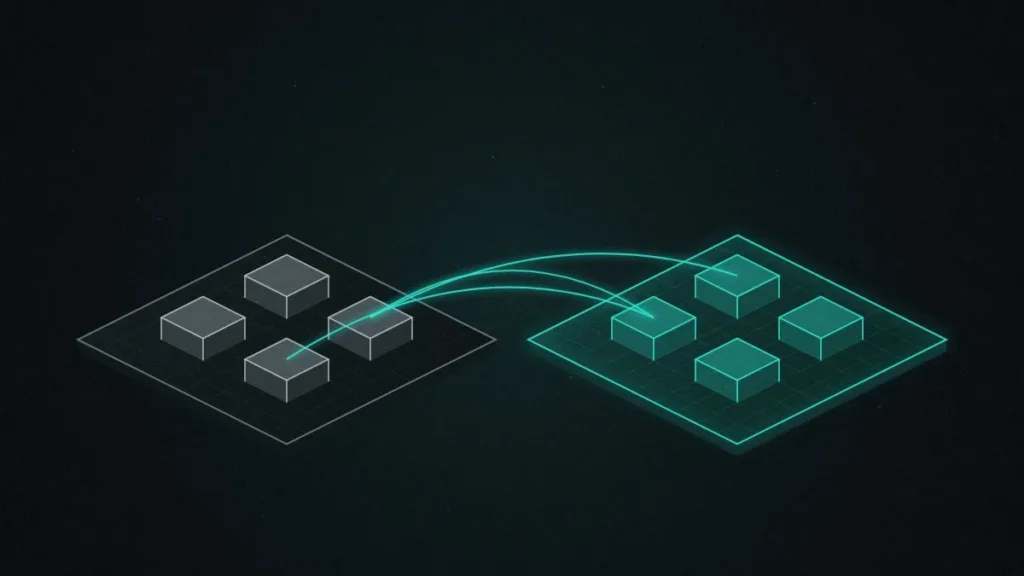
In practice, many good solutions combine both. A business might use standard products for finance and email, and a smaller custom application for the one process that is truly its own, with the pieces connected so information flows between them. That approach often delivers much of the benefit at a fraction of the cost of building everything.
The worst outcome is usually not choosing the wrong option. It is choosing without understanding the process first, and then paying to discover the mismatch later.
Getting an honest answer
Because we do not take commission from software vendors, we have no reason to push you towards one answer or the other. Sometimes the right advice is a product you can buy today. Sometimes it is a small custom build. Sometimes it is a better use of what you already have.
If you are weighing up this decision, a conversation before you commit can save a great deal of time and money.